Showing posts with label abuse. Show all posts

Friday, April 27, 2018

UNDER HIS WINGS


Real feathers—trophies from bird-hunting—graced this Bible verse display given me recently by a friend. As I read the scripture she’d chosen, I thought of how she lived it out in modeling grace through hardship. From the Living Bible she quoted Psalm 36:7:

How precious is your constant love, O God!  All humanity takes refuge in the shadow of Your wings.

It was just perfect for the relational challenges I’ve faced in recent years with troubled people. At times I felt like a little chick scurrying around the scary barnyard while a hungry dog or possum threatened. But when I ran to the Lord—like a hen gathering her chicks underneath her—I felt removed to a place of safety.

This tender image from real life crops up several times in Psalms.

Hide me in the shadow of Your wings. (Psalm 17:8)

I will take shelter in the shadow of your wings until the disaster has passed. (Psalm 57:1)

I long to dwell in your tent forever and take refuge in the shelter of your wings. (Psalm 61:4)

Because you are my help, I sing in the shadow of your wings. (Psalm 63:7)

He will cover you with his feathers, and under his wings you will find refuge (Psalm 91:4—from one of my favorite psalms)

Poetic analogies help me visualize the invisible, like the constant presence and help of God. But sometimes I run across real-life examples that match up with such scriptural truths.  I found one recently in book by Charles Stanley, The Source of My Strength (Nelson, 1994). I learned that this well-known pastor and author lost his father when he was very young.  Then his mother married an abusive man. They both endured his physical and verbal abuse. It took a long time for Stanley to work through the wounds of his childhood, but he did. He found shelter under the wings of the Almighty, and that made the difference.

I especially appreciated his practical advice on dealing with an abuser, by focusing attention not on your supposed “faults” (according to the abuser) but on the bitterness and wounds that cause the abuser to lash out (p. 77):

If a person criticizes you intensely, say, “Listen, what it is about me that is really at the core of what you dislike? Do you realize that you are constantly at me about something?  It is because something is eating away at you? Is there something you don’t like about yourself that is behind the way you criticize me?”

…Intervening in a person’s abusive behavior is actually an act of love for that person.  It is saying to that person, ‘I don’t want to see you so violently unhappy.  I want to see you live in a way that is not marked by repetitive abusive behavior—either verbal or physical.  I want to see you become whole in Christ Jesus.’

Instead of trying to reason with an abuser, Stanley said, we need to turn that person over to God to deal with.  That might include saying this to the abuser: “I will no longer take your abuse. I’m trusting God to defend me.  I’m turning you over to Him, and I’m trusting that He will deal with you.”

I’ve been through some tough stuff in my life, always at the ready to “fix things.”  But some things only God can “fix,” like troubled minds. That’s when He beckons me, like a protective mother hen, under His wings. It’s safe and warm there as He faces what only He can—and should—handle.

Friday, February 6, 2015

Choosing new paths

 
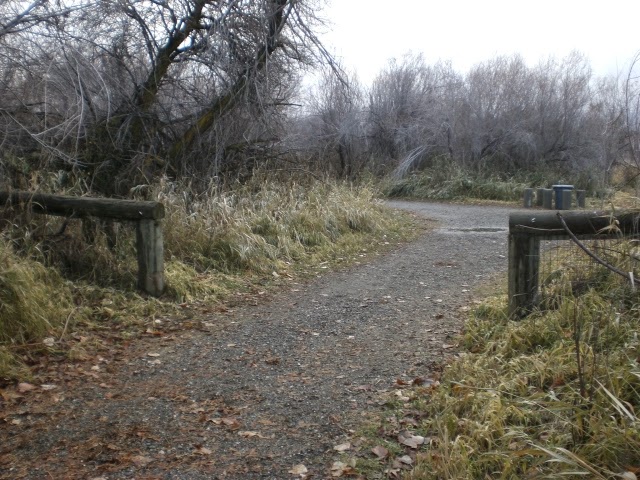
Midway through the trail system at our local riverfront, we face a decision: straight, through the swamplands, or right, through a portion that's gated and closed for part of the year to protect the vulnerable ecosystems. A few hundred feet later, the trails come back together. But in real life, choosing a different path of behavior and choices can carry us far away, either to our good or bad. The “bad” is sadly lived out in millions of families.  But I was encouraged by the example told by Rick Johnson in his book, The Marriage of Your Dreams (Baker, 2012), which I received as a review copy.  Before donating it to my church library, I copied two pages that impacted me.

Johnson grew up in a troubled home in which his mother and stepfather had drunken arguments. He felt rejected and demeaned by his stepfather, resulting in trying to “overachieve to subconsciously prove to him that I was worthy.” He didn’t want to pass on to his own family the same broken legacy. Yet he struggled over the Bible’s command to honor his mother and stepfather, who were so broken.  Johnson concluded:
Perhaps the best way to honor our parents under those circumstances is to live a life that would honor them.  For example, through education, hard work, and the grace of God I was able to break the generational cycles of abuse, addiction, and divorce that were modeled for me.  I have tried to live a life that would cause anyone looking on to say to my parents, ‘You must be so honored that your son is choosing to live a life that is dedicated to helping others.’ At that point I don’t think it matters whether your parents recognize or appreciate the fact that you’re living an honorable life. I believe that fulfills God’s command to honor your mother and father. (pp. 44-45)

The sad truth is that broken family members may not recognize that our “different” lives are a result of following the better path charted by God’s redemptive Hand. God calls us to a singular purpose in Him. I’m reminded of the conversation between Jesus and Peter after the resurrection.  Peter had just heard some disheartening news, that in “feeding” Jesus’ sheep there would be hard times, even places he didn’t want to go, implying a martyr’s death.  Peter turned and saw John, described as the “disciple whom Jesus loved” (although He loved all of them).  Somewhat perturbed that John would miss out on the tough stuff, Peter said, “Lord, what about him?”  Jesus answered, “If I want him to remain alive until I return, what is that to you?  You must follow me” (John 21:22).

What this is saying is that we don’t “design” our journey of discipleship. We allow God to determine the hard spots, the growth places, and even the sacrifices ahead because He knows what is best.  And in choosing the path of righteousness, we follow Him, no turning back. Godly choices will honor even ungodly parents, but most of all they will honor God.